Complete Tax Report: USA
KoinX tax reports for United States provide a detailed, audit-friendly overview of your crypto activity for the selected financial year. They are structured to align with IRS guidelines and international tax reporting standards, covering summaries, transaction breakdowns, and income classifications based on your chosen tax settings.
Sample Report: Complete Tax Report: USA (opens in a new tab)
Tax Guide: Crypto Tax Guide – United States (opens in a new tab)
Cover Page
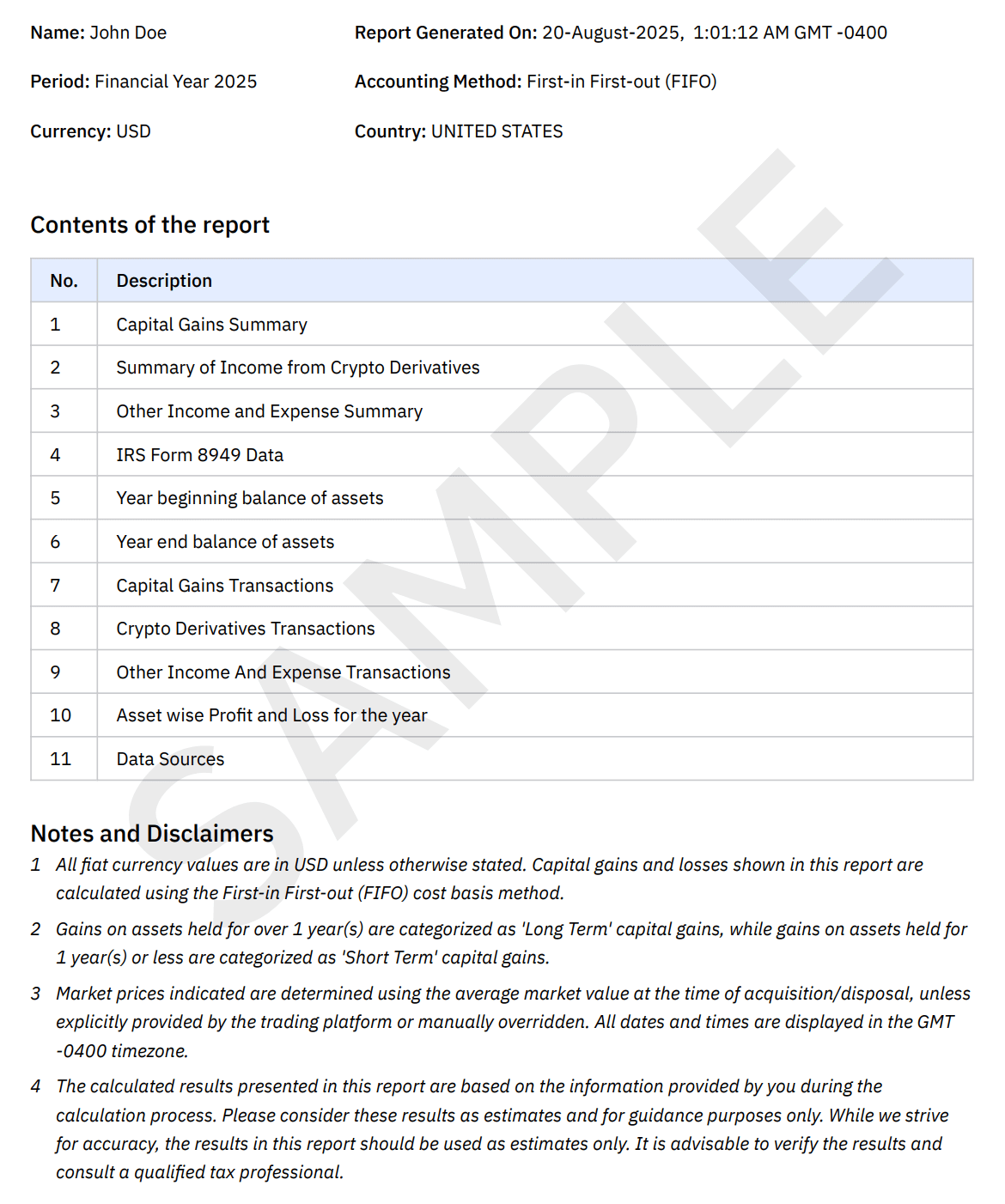
This section summarizes the report’s high-level details and provides context for the figures that follow.
- User details (name, country, reporting currency)
- Report generation date and period covered
- Cost accounting method (FIFO, LIFO, or user choice)
- Report content list
- Disclaimer on usage
Tax Settings and Customizations
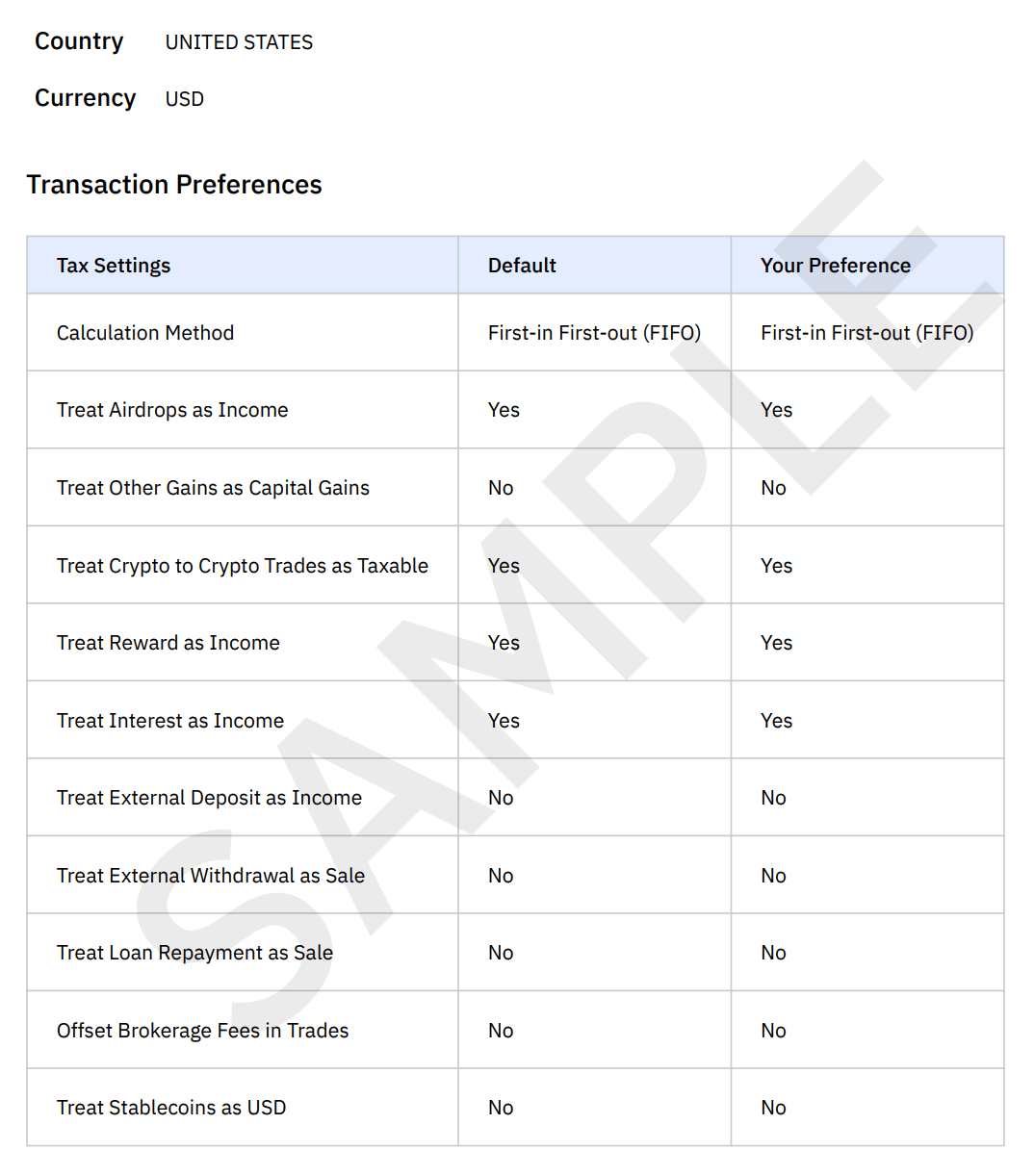
Here you can see the country, reporting currency, and calculation method selected, along with any user-specific customizations for handling different types of crypto transactions.
The IRS requires accurate reporting of your chosen cost method, currency, and treatment of specific income types to calculate tax correctly.
- Selected country: United States
- Reporting currency: USD
- Cost method: FIFO (or user-selected)
- Treatment of airdrops, rewards, crypto-to-crypto trades, derivatives, and income types
- Any custom overrides made by the user
Capital Gains Summary (Short Term and Long Term)
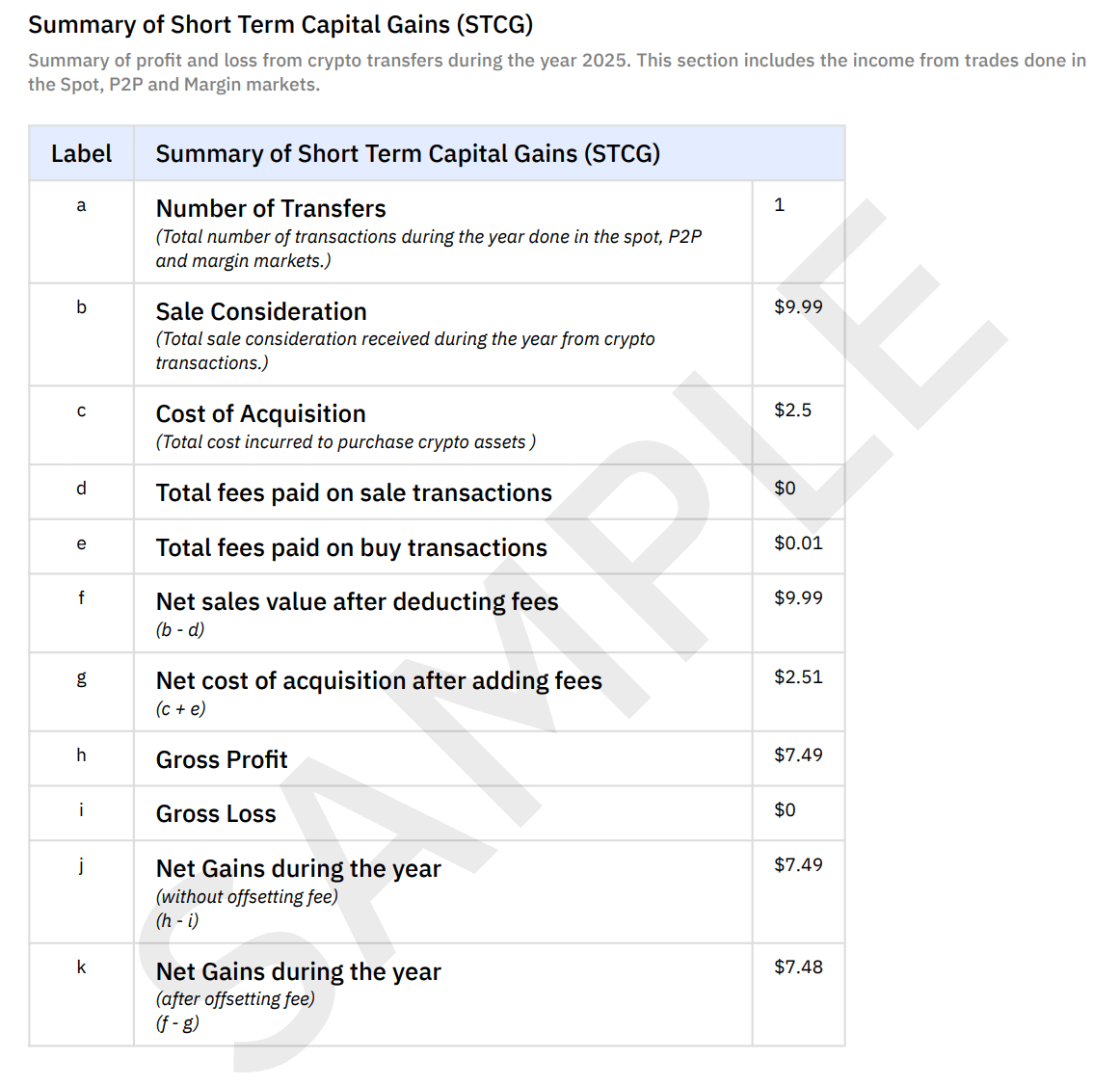
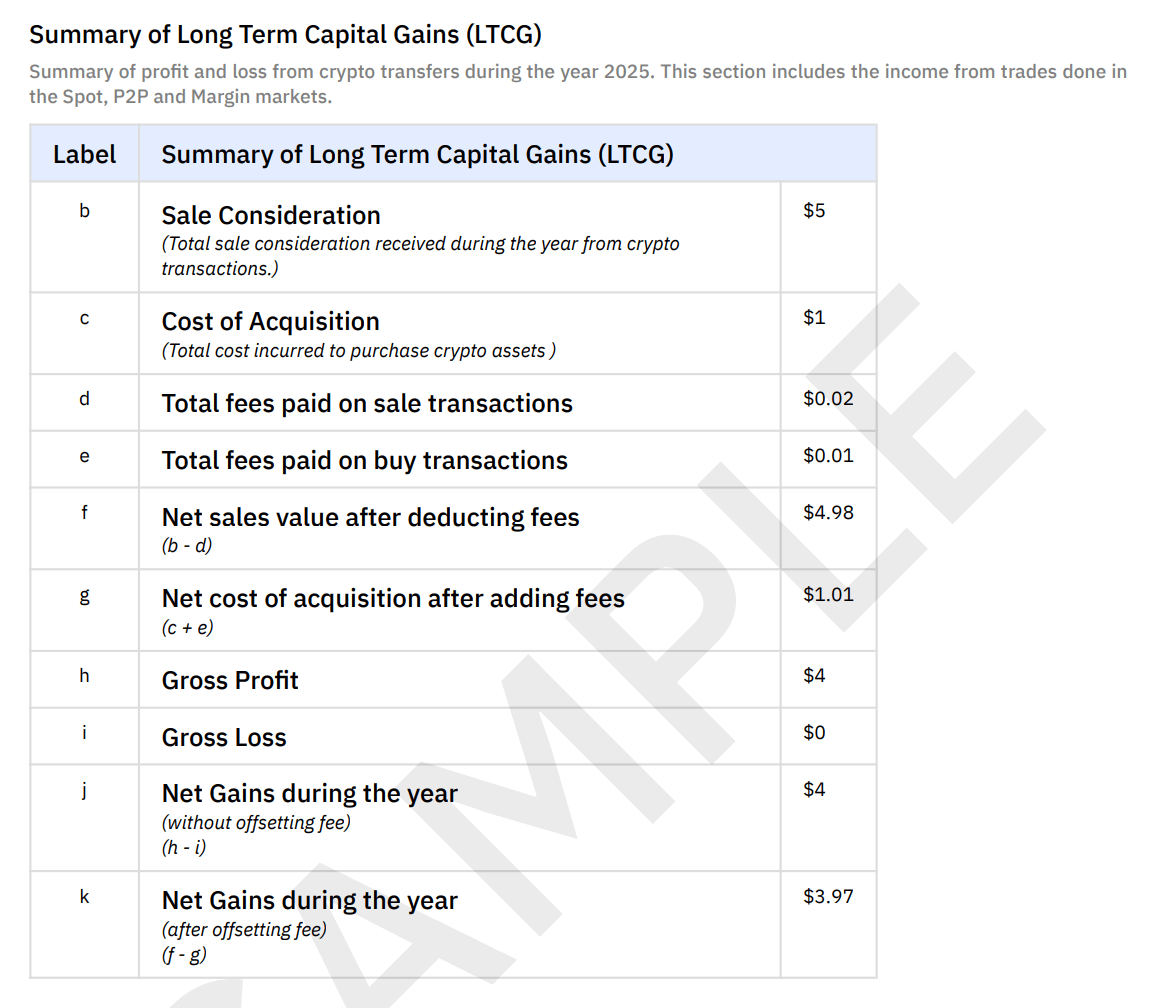
This section summarizes all profits and losses from crypto disposals during the financial year. Under IRS rules, all disposals of crypto (including crypto-to-crypto trades, Spot, P2P, Margin trades, and derivatives) are taxable events. Gains are categorized as short-term (held ≤1 year) or long-term (held >1 year) for tax purposes.
- Number of disposals
- Disposal proceeds (USD)
- Cost basis (USD)
- Gains before losses
- Losses in the year
- Net capital gains
Self-Filing Tips
Use IRS Form 8949 (Sales and Other Dispositions of Capital Assets) and Schedule D to report crypto disposals.
- Enter all individual transactions including crypto-to-crypto trades.
- Report short-term and long-term gains separately.
- Include all fees and costs associated with trades.
Important Notes
- Crypto-to-crypto trades are treated as taxable events.
- Short-term vs. long-term classification affects tax rates.
- Form 8949 requires transaction-level records including purchase/sale dates, asset, quantity, cost basis, and proceeds.
Summary of Income from Crypto Derivatives
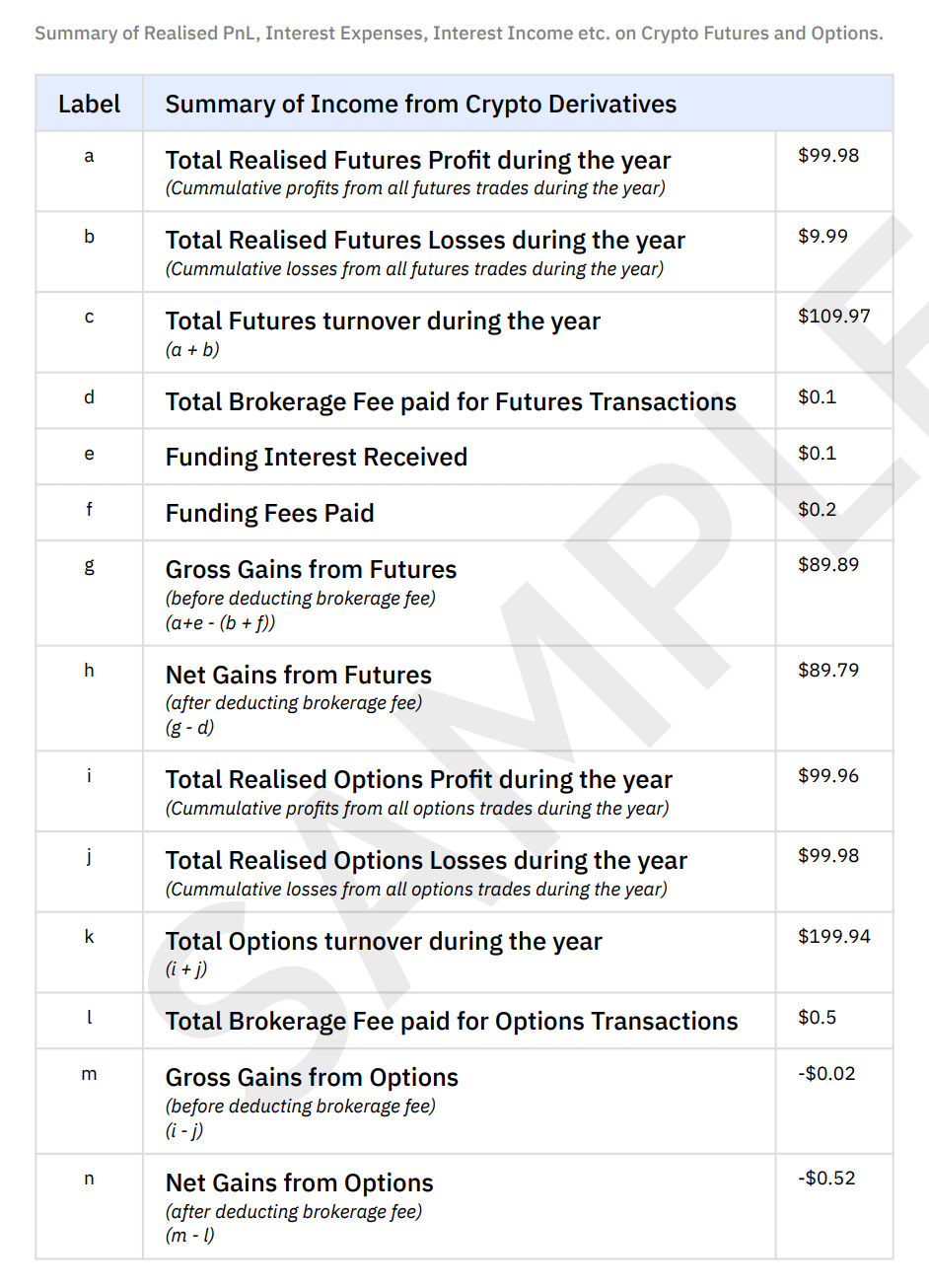
This section covers realised profit/loss, margin/funding fees, and interest from crypto futures and options. IRS generally treats derivatives trading as part of capital gains if speculative. Professional or frequent trading may be treated as business income. Margin and funding fees can often be deducted from taxable gains.
- Total realised profit/loss
- Brokerage, margin, and funding fees
- Net profit/loss after fees
Summary of Other Incomes
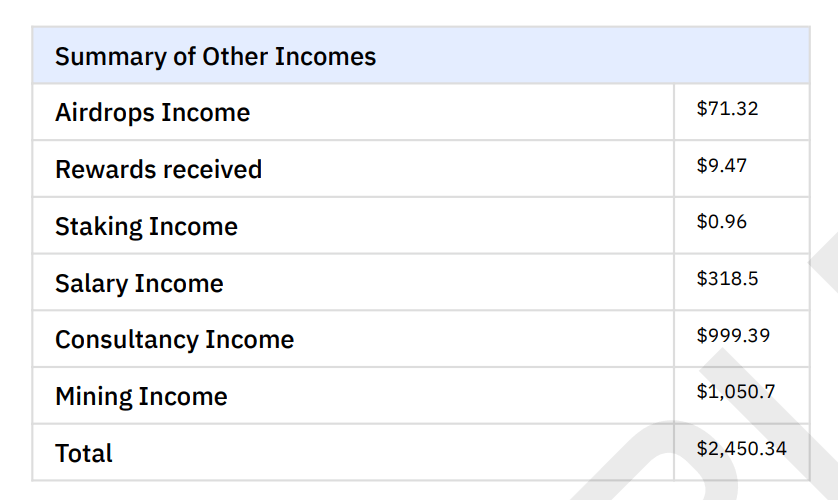
This section includes airdrops, staking, mining, salaries, consultancy payments, and other crypto receipts. The IRS treats most crypto income outside trading as taxable income. This section helps categorize all non-trading crypto income.
- Airdrops
- Rewards
- Staking income
- Salary income received in crypto
- Consultancy income in crypto
- Mining income
- Borrow/lending profits
Summary of Other Expenses, Gifts, and Donations
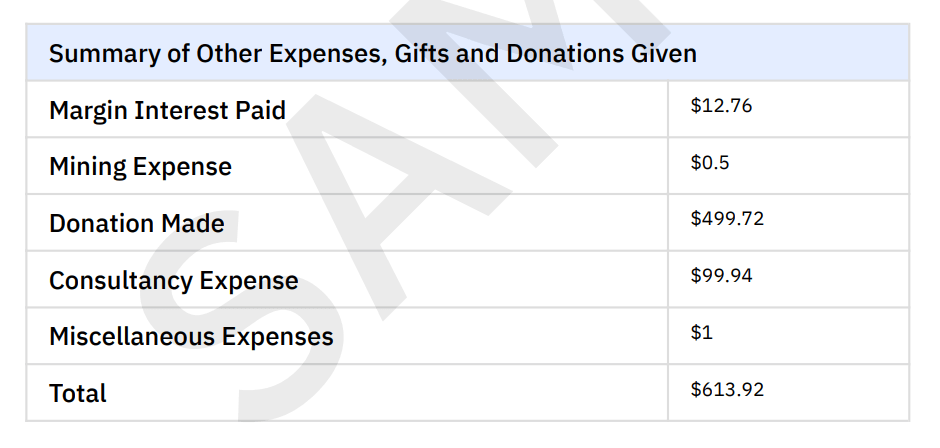
This section lists outflows that may reduce taxable income, including interest, mining expenses, consultancy costs, donations, and miscellaneous fees. Certain expenses may be deductible against crypto gains or income.
- Margin/funding interest
- Mining-related expenses
- Consultancy expenses
- Donations
- Miscellaneous protocol and brokerage fees
IRS Form 8949 - Short Term

This section contains details of short-term capital asset transactions, where assets were held for 1 year or less, as per IRS guidelines. For each transaction, it includes:
- Description of property
- Date acquired
- Date sold or disposed of
- Proceeds
- Cost or other basis
- Adjustment, if any, to gain or loss
- Codes
- Amount of adjustment
- Gain or (loss)
The totals section summarizes proceeds, cost basis, and gains or losses. This data is used to complete IRS Form 8949 and Schedule D.
IRS Form 8949 - Long Term
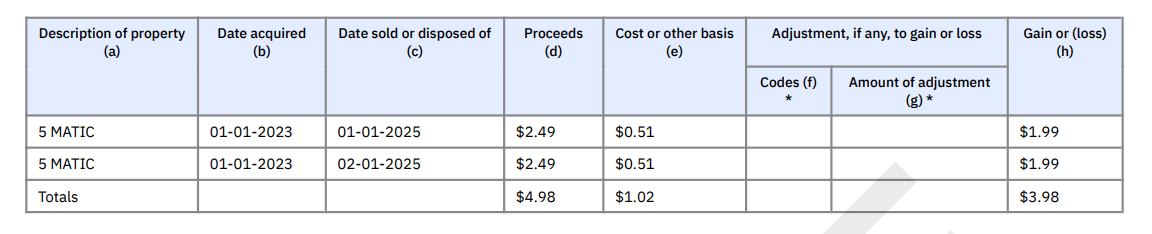
This section contains details of long-term capital asset transactions, where assets were held for more than 1 year, as per IRS guidelines. For each transaction, it includes:
- Description of property
- Date acquired
- Date sold or disposed of
- Proceeds
- Cost or other basis
- Adjustment, if any, to gain or loss
- Codes
- Amount of adjustment
- Gain or (loss)
The totals section summarizes proceeds, cost basis, and gains or losses. This data is intended to be used directly while filing IRS Form 8949 and Schedule D.
Year Beginning Balance of Assets
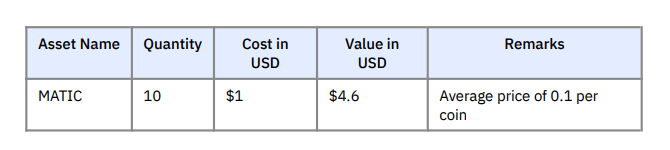
This section shows coin-wise start of the year holdings with valuation. It reflects the assets held at the beginning of the financial year based on available transaction history and balances.
For each asset, the following details are provided:
- Asset Name
- Quantity
- Cost
- Value
- Remarks (if any)
Year End Balance of Assets
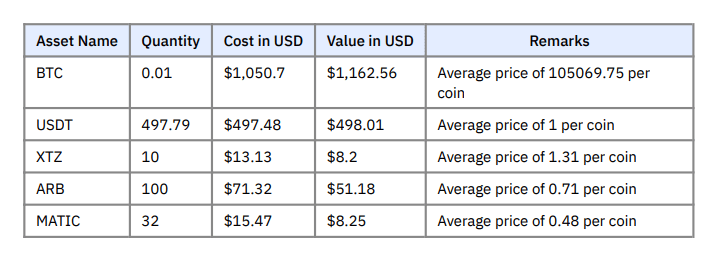
This section shows coin-wise end of the year holdings with valuation. It reflects the assets held at the end of the financial year after accounting for all transactions during the year.
For each asset, the following details are provided:
- Asset Name
- Quantity
- Cost
- Value
- Remarks (if any)
Capital Gains Transactions

This section is a detailed record of all disposals with purchase/sale dates and gain/loss. The IRS requires a full transaction-level record for capital gains reporting. Crypto-to-crypto trades are considered disposals, so gains must be calculated individually.
- Purchase and sale dates
- Asset and quantity
- Buy value, sell value, gain/loss
Crypto Derivatives Transactions
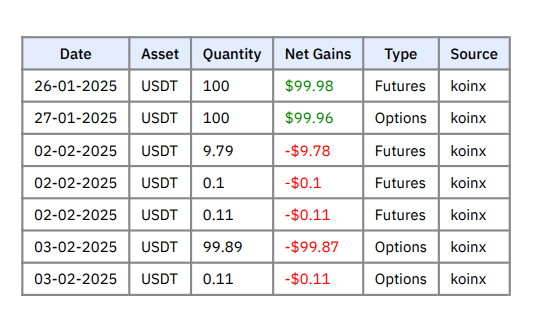
This section lists individual futures and options trades, showing net gain/loss per transaction.
Each derivative trade is a taxable event. Gains/losses are recorded per trade.
- Asset
- Quantity
- Net gain/loss
- Transaction type (futures or options)
Other Income and Expense Transactions
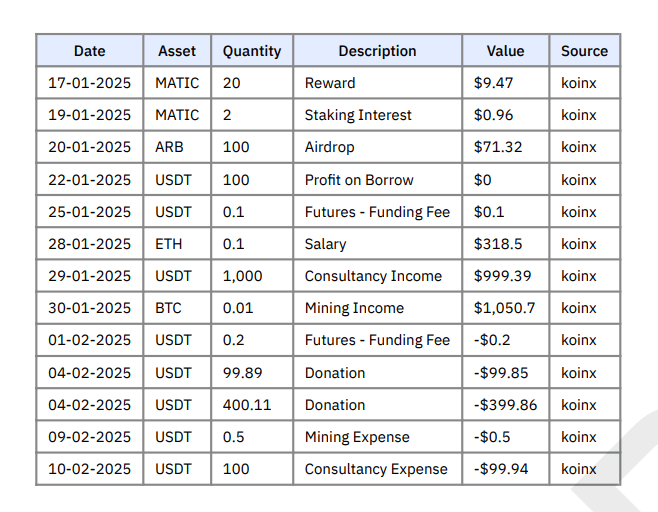
This section covers additional income or expense events such as airdrops, mining, consultancy, donations, and borrow/lending profits or fees. All miscellaneous crypto transactions impacting income or gains should be recorded.
- Airdrops and rewards
- Mining income and expenses
- Consultancy income and expenses
- Donations
- Borrow/lending-related fees or profits
Asset wise Profit and Loss for the year
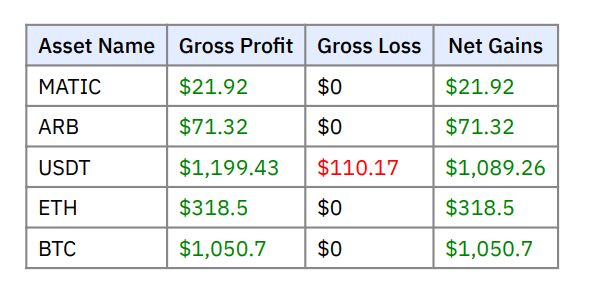
This section shows a token-by-token breakdown of profits and losses for the year. The IRS requires gains and losses to be tracked per asset to ensure correct reporting and calculation of tax liability.
- Gross profit
- Gross loss
- Net gain per asset
Data Sources
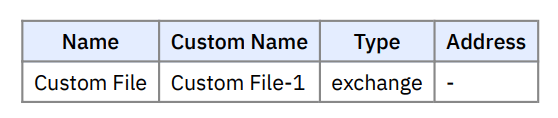
Data sources identify all exchanges, wallets, and import files that contributed to the report. The IRS may request proof of transactions. Listing sources ensures traceability and audit compliance.
- Exchange names
- Wallet addresses and labels
- Custom file imports
Summary
KoinX tax reports for the United States provide:
- A complete record of crypto activity in line with IRS requirements
- Clear classification of income and capital gains for accurate filing
- Separate short-term and long-term capital gains reporting
- Inclusion of crypto-to-crypto transactions as taxable events
- Support for multiple income categories including mining, staking, salaries, and consultancy
- Full transaction audit trail for transparency and compliance
Disclaimer: All figures are based on available data and user preferences at the time of report generation. Always verify figures and consult a qualified tax professional for compliance with U.S. tax laws.